
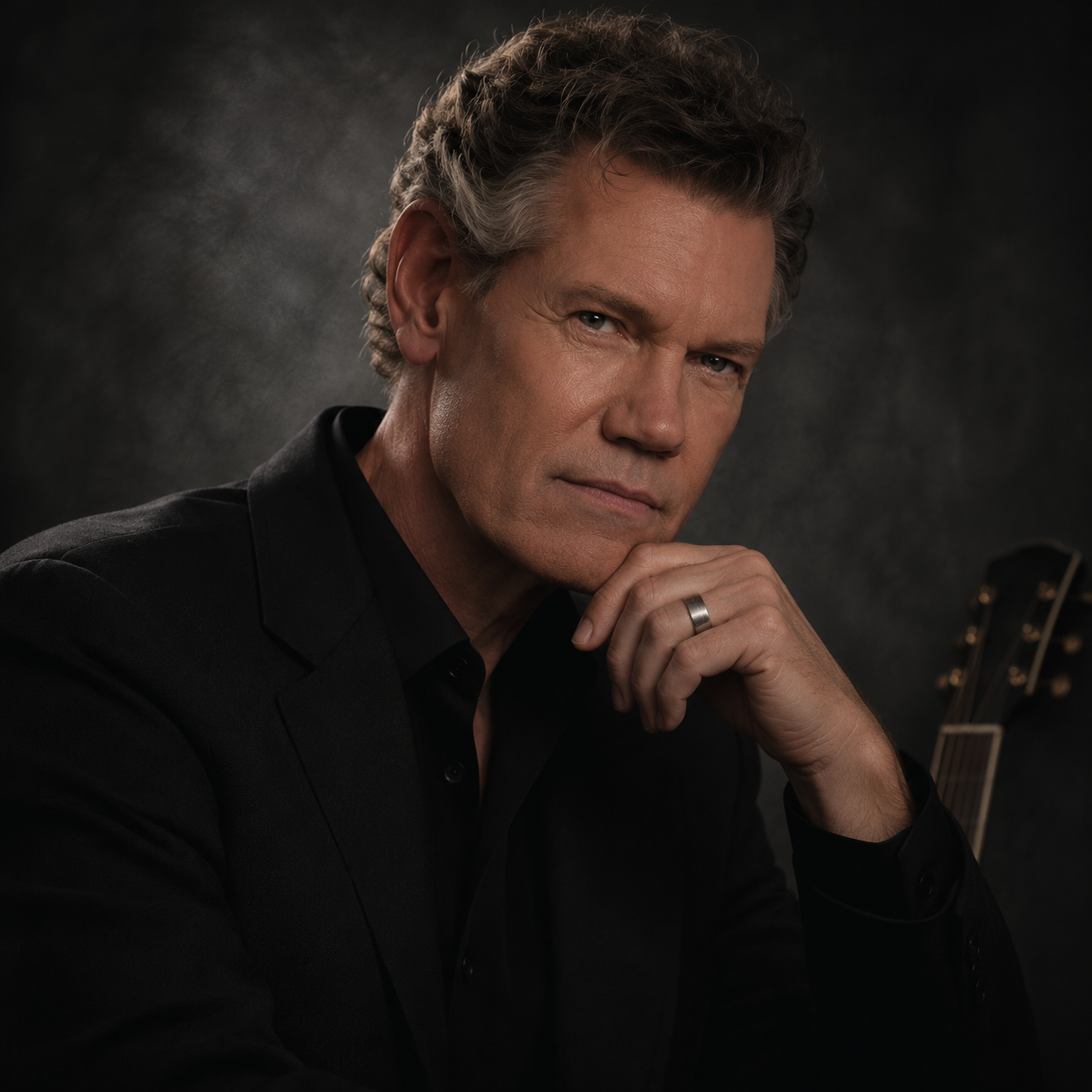
Randy Travis
GREAT CHOICE: Randy Travis!
Great music deserves to be discovered, enjoyed and shared.
CAN YOU SPARE A CUP OF COFFEE?
Audiophile-Streaming is a personal passion project, built with countless hours of discovering, selecting and sharing exceptional music.
I personally cover, without sponsors, the ongoing costs of hosting, software and subscriptions to keep the music discoveries coming. If you enjoy my work, your support is always appreciated.
A LITTLE THANK YOU IN RETURN
Just one coffee gives you lifetime access to the Coffee Club and all its playlists.
No subscriptions. No recurring fees.
A truly audiophile cowboy is in my opinion Randy Travis, I am not 100% independent because I love (t)his music…
“On the Other Hand” did not make Randy Travis a star when it was first released in 1985. Warner Bros. Records gave the song another chance the following year, and this time it reached number one on the country charts. I find that an interesting beginning for an artist who would become one of the most important voices in modern country music. There was nothing particularly fashionable about his sound, and he certainly wasn’t trying to compete with the polished pop-country productions of the time. His deep baritone, relaxed delivery and unmistakably traditional approach were exactly what made him different. For me, Randy Travis represents a kind of country music in which the singer trusts the song enough not to interfere with it.
Born Randy Bruce Traywick on May 4, 1959, in North Carolina’s Union County, Travis grew up in the small town of Marshville. His father introduced him to traditional country music, particularly artists such as Hank Williams, Lefty Frizzell, Ernest Tubb and George Jones. Those influences are easy to recognise in his later recordings, especially in the way he shapes a phrase and allows the meaning of a lyric to determine his delivery. His teenage years were troubled, but music gradually offered him a different direction. Elizabeth “Lib” Hatcher, who ran a nightclub in Charlotte, became an important figure in his early career and later his manager. They moved to Nashville in 1981, where Travis worked as a cook and performed at the Nashville Palace under the name Randy Ray. Record companies initially considered his sound too traditional, but Warner Bros. finally signed him in 1985.
The Voice That Changed Country Music
His 1986 album Storms of Life, produced by Kyle Lehning, remains one of the strongest introductions to Randy Travis. It arrived when country music was heavily influenced by pop production, yet the album placed traditional songwriting, acoustic instruments and an unmistakable country voice at its centre. Songs such as “1982,” “Diggin’ Up Bones” and “On the Other Hand” helped establish him as a leading figure in the new traditionalist movement. What appeals to me is the natural balance between the arrangements and his singing. There is enough musical detail to keep things interesting, but the musicians rarely compete for attention. The album became a major commercial success and helped demonstrate that traditional country music could still attract a large audience.
“On the Other Hand,” written by Paul Overstreet and Don Schlitz, is particularly revealing because it asks Travis to communicate a difficult personal decision without turning the song into a dramatic performance. A man is tempted by another woman but remembers the wedding ring on his hand and the commitment it represents. Travis sings with a calmness that makes the conflict more believable to me. His low register has a warm, rounded quality, while the higher phrases retain their natural country character. I enjoy how the gentle instrumental backing leaves space around his voice, allowing small changes in emphasis to become noticeable. It is also a good example of why I value vocal realism in a recording more than impressive production effects.
The next major step was Always & Forever, released in 1987, again with Kyle Lehning producing. Its best-known song, “Forever and Ever, Amen,” also written by Overstreet and Schlitz, showed a warmer, more playful side of Travis. The rhythm has an easy movement, the melody is immediately memorable, and his delivery makes the promises in the lyrics sound sincere rather than exaggerated. I particularly like the combination of acoustic guitars, piano, steel guitar and the distinctive resonator-like sound heard in the introduction. That opening was played by Paul Franklin on a specially developed instrument called a Pedabro. The recording has a pleasing sense of separation, with the instruments remaining recognisable without drawing attention away from the singer.
This is one recording where I think a carefully balanced audio system can reveal something useful about the production. Travis’s voice occupies a solid, natural position in the mix, while the accompanying instruments provide movement and texture around it. The bass gives the song a comfortable foundation without making the lower end of his voice sound excessively heavy. On revealing speakers or headphones, I enjoy following the small instrumental responses between vocal phrases and hearing how little space the arrangement actually needs. Engineer Joe Bogan and producer Kyle Lehning achieved a particularly successful balance between warmth and clarity. The result isn’t about an enormous soundstage or spectacular dynamics, but about making a group of excellent musicians sound comfortable together.
From Traditional Country to Gospel
Travis continued recording successfully through the late 1980s and into the 1990s, although country music gradually moved towards a different commercial sound. He remained committed to his traditional approach while exploring different material and collaborations. His 1990 album Heroes & Friends brought him together with established artists, including George Jones, one of the singers who had influenced him as a young man. He also developed his own songwriting, something that is sometimes overlooked because he became famous for interpreting songs written by others. After his long association with Warner Bros., he recorded for DreamWorks Records before moving further into inspirational and gospel music. I regard that development as a natural extension of his musical personality rather than a complete change of direction.
One of the most convincing examples is “Three Wooden Crosses,” from the 2002 album Rise and Shine, released through Word/Curb. Written by Kim Williams and Doug Johnson, the song tells the story of four people travelling together and the unexpected consequences of a tragic accident. Its structure depends on the listener following the details, and Travis delivers those details with remarkable patience. He doesn’t reveal too much emotion too early, which makes the eventual conclusion more effective. I appreciate that the arrangement supports the story without constantly telling me how I should feel. The song became his first number-one country hit in eight years and received the Country Music Association’s Song of the Year award in 2003.
His gospel recordings also reveal something important about his voice. Travis never needed a particularly large vocal range or dramatic changes in volume to make his singing convincing. He could communicate warmth, regret, affection or faith through surprisingly small adjustments in timing and emphasis. I especially appreciate the way he finishes sentences, sometimes holding a note gently and sometimes letting a word end almost conversationally. That approach works well in traditional country music, but it becomes especially effective when the song depends on a personal story or a simple expression of belief. For my taste, these quieter performances are often more rewarding than the more polished, commercially oriented recordings found elsewhere in country music.
His influence also extended to a younger generation of performers. Artists including Alan Jackson and Garth Brooks followed the traditional country revival that Travis had helped bring to a wider audience. His songwriting received renewed attention in 2009 when Carrie Underwood recorded “I Told You So,” a song Travis had written and previously recorded himself. Their duet version earned a Grammy Award for Best Country Collaboration with Vocals. I find it interesting how comfortably his voice works beside a much more contemporary vocal style. Even in that setting, his restrained approach gives the performance a recognisable character.
A Voice That Remains Important
In 2013, Travis suffered a severe stroke following serious heart problems. The effects dramatically reduced his ability to speak and sing, bringing his recording career to an unexpected halt. His recovery has been long and difficult, supported by his wife Mary and extensive rehabilitation. When he was inducted into the Country Music Hall of Fame in 2016, he managed to sing part of “Amazing Grace,” an especially meaningful moment in his public recovery. He has since remained involved with music, although his ability to perform as he once did has been severely limited. His story is moving, but I think it is important that his musical achievements remain the main reason we remember him.
In 2024, Warner Records Nashville released “Where That Came From,” using artificial intelligence technology to recreate his singing voice with his involvement and approval. It raised interesting questions about the future of recorded music, particularly the difference between a singer’s actual performance and a technologically reconstructed one. Personally, I place greater value on recordings that preserve the original human performance, including its small imperfections. That makes the November 2026 release of Same Old Way particularly interesting. Longtime producer Kyle Lehning assembled twelve previously unreleased recordings made between 1986 and 2013, using Travis’s original vocal performances rather than newly generated singing. For me, that distinction matters because these recordings preserve the voice and musical decisions of the artist himself.
Looking at Randy Travis’s career, I understand why his influence reaches well beyond the records that originally made him famous. Storms of Life demonstrated that traditional country music could become commercially successful again, Always & Forever confirmed his ability to make straightforward love songs feel genuine, and “Three Wooden Crosses” showed how effectively his voice could carry a complete story. For anyone unfamiliar with his music, I would begin with Storms of Life and then explore the later recordings to hear how consistently he maintained his musical identity. I don’t consider every arrangement equally interesting, and some recordings reflect the production fashions of their period more than others. But the essential quality of his singing remains remarkably consistent. What makes Randy Travis special to me is not simply the depth or warmth of his baritone, but the restraint and natural timing with which he gives every word its proper meaning.