
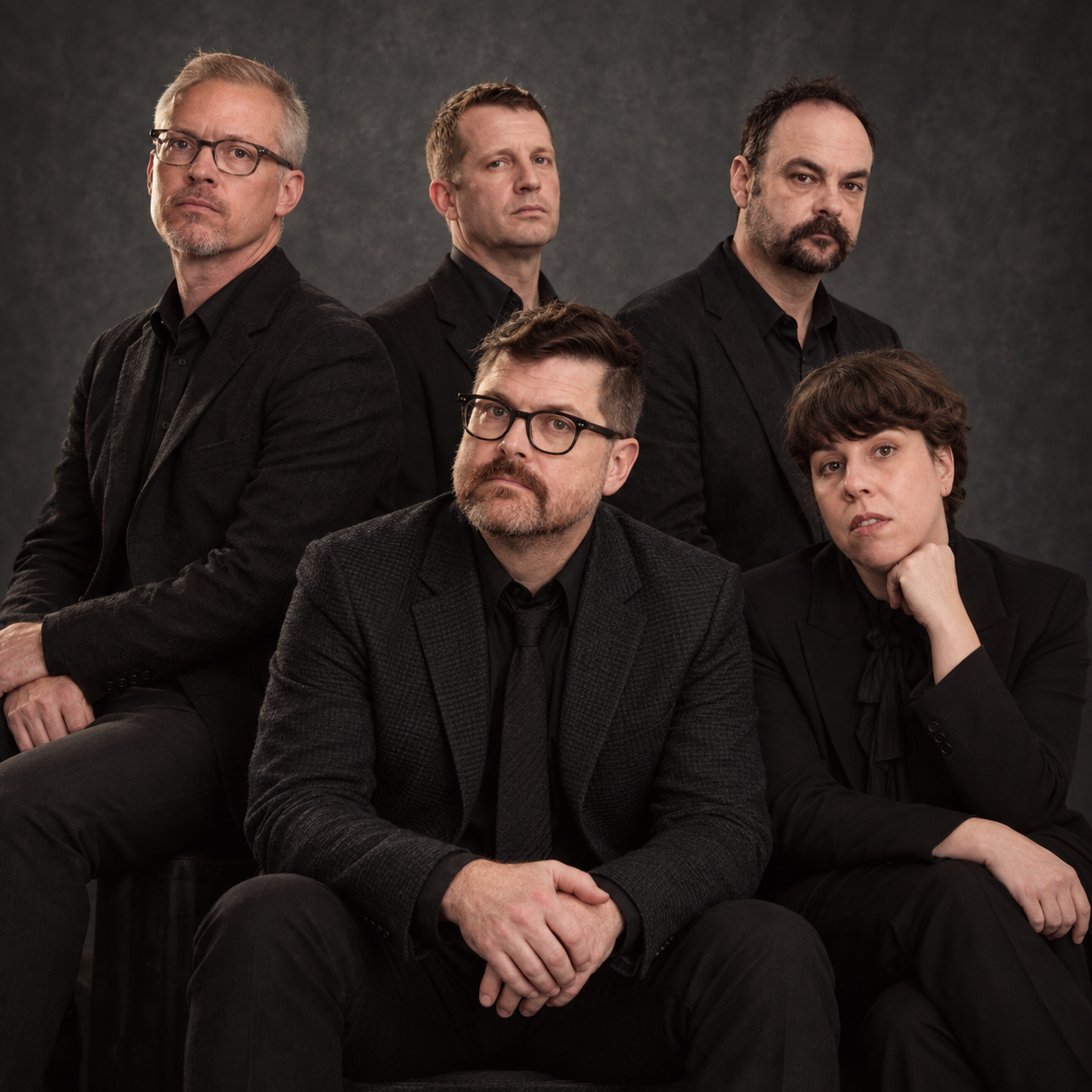
The Decemberists
GREAT CHOICE: The Decemberists!
Great music deserves to be discovered, enjoyed and shared.
CAN YOU SPARE A CUP OF COFFEE?
Audiophile-Streaming is a personal passion project, built with countless hours of discovering, selecting and sharing exceptional music.
I personally cover, without sponsors, the ongoing costs of hosting, software and subscriptions to keep the music discoveries coming. If you enjoy my work, your support is always appreciated.
A LITTLE THANK YOU IN RETURN
Just one coffee gives you lifetime access to the Coffee Club and all its playlists.
No subscriptions. No recurring fees.
A song about a doomed love affair, a story involving a stolen bicycle, or a complete album built around an old Japanese folk tale. These are not the usual ingredients of an indie rock band, but for The Decemberists, they are perfectly normal. What makes this Portland band interesting to me is how naturally they combine unusual storytelling with music that is often surprisingly accessible. Their songs can be complicated, dramatic, funny, or deeply personal, yet beneath all those words and arrangements I hear musicians who understand the importance of a good melody. I particularly enjoy the contrast between their ambitious ideas and the relatively straightforward way they sometimes deliver them.
The Decemberists formed in Portland, Oregon, in 2000, after singer, guitarist, and songwriter Colin Meloy moved from Montana to the city. He connected with bassist Nate Query, keyboardist Jenny Conlee, and multi-instrumentalist Chris Funk, establishing the musical foundation of the band. Drummer John Moen later completed the lineup that became most closely associated with their recordings. Meloy remains the central creative voice, but I think it would be a mistake to consider The Decemberists simply his backing band. The contributions of Conlee, Funk, Query, and Moen give the music much of its character, particularly when the arrangements move beyond conventional guitar-driven rock.
Their musical influences are an interesting combination of British folk, American alternative rock, and traditional storytelling. Artists such as Fairport Convention, Pentangle, R.E.M., and The Smiths help explain different aspects of their sound. I hear the influence of British folk music in the acoustic arrangements and traditional melodies, while the more direct guitar passages often remind me of American college rock from the 1980s. Meloy’s singing is equally distinctive. His slightly nasal voice, clear pronunciation, and deliberate phrasing make him immediately recognisable, although I can understand why his vocal style might take some getting used to. Personally, I appreciate that he sounds like himself rather than trying to fit into a conventional idea of a great rock singer.
From Independent Beginnings to Bigger Ambitions
The band’s early recordings established their unusual identity almost immediately. Their debut EP, 5 Songs, appeared in 2001, followed by their first full-length album, Castaways and Cutouts, in 2002. With Her Majesty the Decemberists in 2003 and Picaresque in 2005, both released through Kill Rock Stars, they developed a reputation for combining elaborate narratives with memorable folk-rock arrangements. These albums introduced listeners to a world populated by unusual characters, historical references, and stories that did not necessarily end happily. What I find particularly appealing is that the music rarely feels like an excuse for the lyrics. Even when I am not concentrating on the story, the melodies, instrumental details, and changes in rhythm give me plenty to enjoy.
For me, Picaresque is one of the clearest examples of what made The Decemberists different from their contemporaries. Released on March 22, 2005, and produced by Chris Walla, the album combines energetic rock songs with quieter acoustic material and more elaborate arrangements. The Engine Driver is a particular favourite because it demonstrates how effectively Meloy can express emotion without needing a complicated musical structure. His delivery is restrained, the melody is direct, and the accompaniment leaves enough room for the words to carry their weight. I like how the song develops without losing its intimate atmosphere.
The same album also contains 16 Military Wives, which approaches political satire with an almost cheerful musical attitude. Its lively rhythm, bright instrumentation, and repeated vocal phrases create an interesting contrast with the subject matter. It is a good example of the band’s willingness to make serious observations without always sounding serious. Elsewhere, The Mariner’s Revenge Song takes their storytelling ambitions much further, building a lengthy and increasingly dramatic narrative around a memorable folk-inspired arrangement. I admire the imagination involved, although I find their shorter, more focused songs easier to enjoy repeatedly. That balance between storytelling and musical directness is one of the recurring tensions in their work.
Their move to Capitol Records for The Crane Wife in 2006 marked an important change in their career. Signing to a major label did not lead them toward safer or simpler material. Instead, they created one of their most ambitious albums, combining progressive rock influences, traditional folk elements, and songs inspired by a Japanese folktale. The album demonstrated that The Decemberists could expand their musical ideas without abandoning the qualities that had attracted their original audience.
The Crane Wife and the Art of Arrangement
The Crane Wife is the album I would choose to demonstrate the band’s instrumental range and their ability to build tension through arrangement. The three-part title composition is particularly interesting because its musical structure follows the emotional development of the story. The quieter passages give Meloy’s voice room to communicate the narrative, while the fuller sections introduce stronger rhythms, electric guitars, and more substantial keyboard textures. I enjoy how the musicians move between these different moods without making the changes feel arbitrary.
There is also plenty here for listeners who appreciate the details of a recording. In the quieter sections, the relationship between the acoustic instruments, voice, and keyboards is easy to follow. When the arrangements become denser, the bass and drums provide a solid foundation while the guitars and keyboards add movement around the vocal. On a well-balanced stereo system, I find it rewarding to concentrate on how these individual parts interact rather than simply listening to the overall impact. The production is not always delicate or spacious, particularly during the louder sections, but that density is part of the musical intention.
Another important piece from the album is The Island, an extended composition that moves through several musical sections. Its changing rhythms and instrumental passages reveal the band’s interest in progressive rock, but I think the real achievement is that the different sections still feel connected. The musicians are clearly capable of handling complex arrangements, yet they generally avoid turning their performances into demonstrations of technical ability. For me, the most convincing moments are those where the instrumental development strengthens the story rather than competing with it.
That adventurous approach became even more pronounced with The Hazards of Love in 2009. Conceived as a continuous narrative, the album brought together folk, progressive rock, and heavier electric passages. Guest vocalists Shara Nova, then performing as Shara Worden, and Becky Stark contributed important characters to the story, expanding the band’s musical possibilities beyond Meloy’s familiar lead voice. I respect the ambition and the commitment required to make such a project work. At the same time, I find it an album that asks more patience from the listener, particularly when individual songs depend heavily on the surrounding narrative.
A More Direct Sound and a Lasting Identity
After these increasingly elaborate projects, The King Is Dead, released in January 2011, represented a significant change in direction. Instead of building another large musical narrative, The Decemberists concentrated on shorter songs, simpler structures, and a sound influenced by American folk and country rock. The decision was deliberate, and the result became their first album to reach number one on the US Billboard 200. It also introduced a notable collaboration with R.E.M. guitarist Peter Buck, whose playing fitted naturally into the band’s more direct approach.
For listeners unfamiliar with The Decemberists, I consider The King Is Dead an excellent starting point. Down by the Water immediately establishes the album’s character with harmonica, acoustic and electric guitars, and a rhythm that feels relaxed but purposeful. The harmony vocals of Gillian Welch add another appealing dimension. I particularly enjoy the way the instruments support one another without trying to dominate the arrangement. There is enough space to appreciate individual contributions, and the song demonstrates that The Decemberists do not need a complicated concept to produce something distinctive.
The quieter material is equally revealing. January Hymn and June Hymn show Meloy working with relatively simple melodies and understated arrangements. His voice becomes more vulnerable in this setting because there is less instrumentation to soften its distinctive qualities. I appreciate the natural movement of the acoustic guitar and the way the vocal phrasing follows the emotional meaning of the words. From an audiophile listening perspective, these songs also provide a useful contrast with the denser recordings on The Crane Wife. Rather than concentrating on dramatic stereo effects or powerful dynamics, I find myself listening to the balance between the voice and the accompanying instruments.
The band’s subsequent career has shown that neither their elaborate arrangements nor their simpler folk-rock songs represent the whole story. What a Terrible World, What a Beautiful World followed in 2015, bringing a more openly personal dimension to some of Meloy’s writing. With I’ll Be Your Girl in 2018, they introduced more prominent synthesizer textures and explored a different production approach with producer John Congleton. I appreciate their willingness to experiment, even if I generally prefer the more organic instrumental character of their earlier recordings.
Their 2024 album, As It Ever Was, So It Will Be Again, released on June 14 through YABB Records, demonstrated that the band still had considerable creative energy. The album moves between approachable folk-rock songs and more ambitious compositions, including the nineteen-minute Joan in the Garden. I find that combination particularly revealing because it brings together the two sides of The Decemberists that have defined their career. They can write concise, engaging songs, but they are also prepared to develop an idea far beyond the usual boundaries of popular music. After more than two decades, their artistic personality remains recognisable even when the arrangements change.
Looking at their career as a whole, I think The Decemberists have made an important contribution to alternative folk rock by showing that detailed storytelling, traditional influences, and adventurous arrangements can coexist with accessible songwriting. Their music is not always immediate, and some of the longer compositions demand more attention than I normally give to casual listening. But albums such as Picaresque, The Crane Wife, and The King Is Dead reveal a band with a clear musical identity and a genuine understanding of how instruments, melodies, and lyrics work together. I value their ability to move from an intimate acoustic song to a complicated arrangement without losing that identity. More than their literary references or unusual subjects, it is their unmistakable sense of musical storytelling that makes The Decemberists such an interesting band to me.