
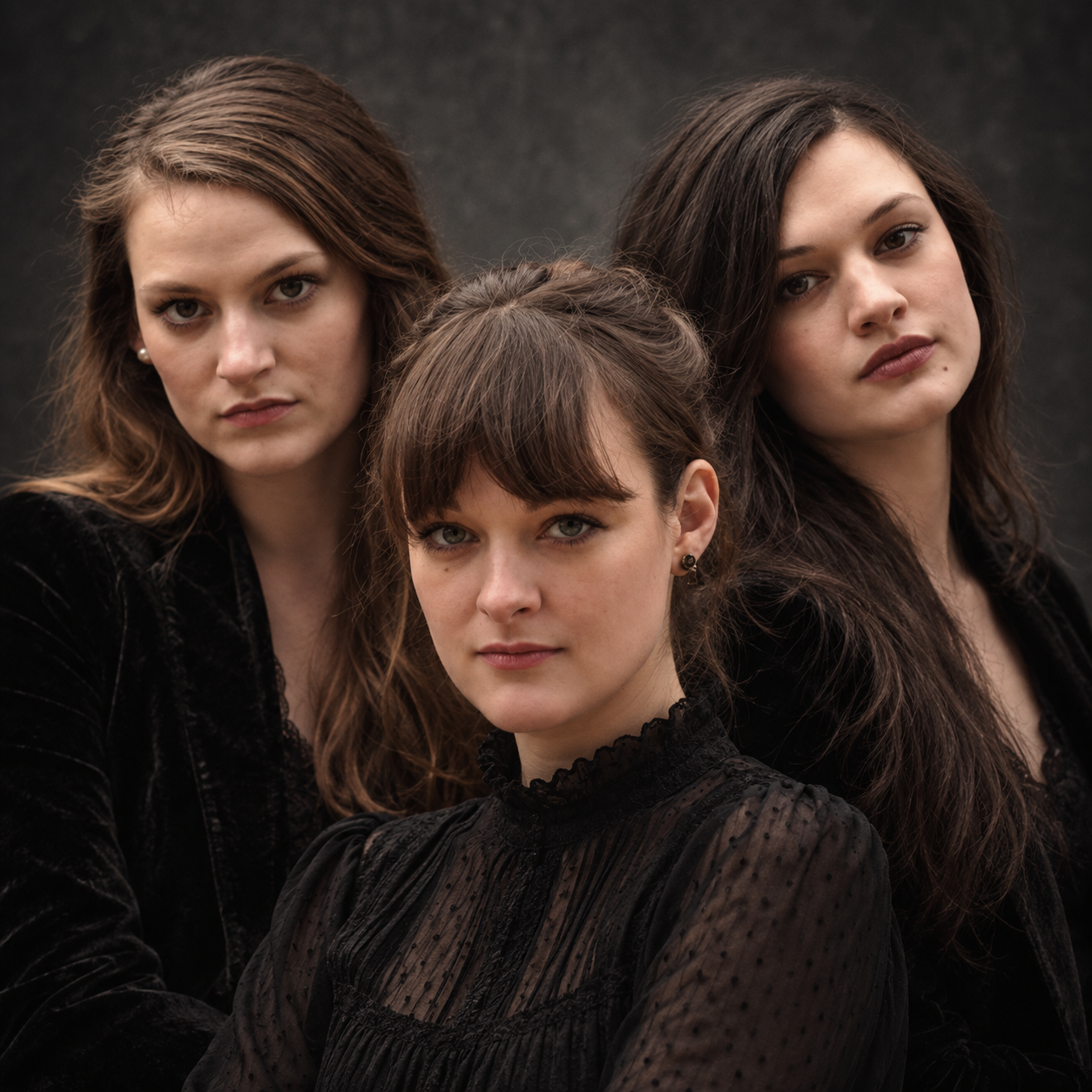
The Staves
GREAT CHOICE: The Staves!
Great music deserves to be discovered, enjoyed and shared.
CAN YOU SPARE A CUP OF COFFEE?
Audiophile-Streaming is a personal passion project, built with countless hours of discovering, selecting and sharing exceptional music.
I personally cover, without sponsors, the ongoing costs of hosting, software and subscriptions to keep the music discoveries coming. If you enjoy my work, your support is always appreciated.
A LITTLE THANK YOU IN RETURN
Just one coffee gives you lifetime access to the Coffee Club and all its playlists.
No subscriptions. No recurring fees.
The first thing I notice about The Staves is how difficult it is to separate the voices from the songs themselves. For much of their career, sisters Jessica, Camilla and Emily Staveley-Taylor used harmony not as decoration but as the centre of their music. Three voices could sound almost like one instrument, yet I could still hear the individual parts moving around each other. That made their early folk recordings immediately attractive, but what interests me more is how far they pushed beyond that starting point. Over time, The Staves became less concerned with simply making beautiful harmonies and much more interested in texture, rhythm, tension and the emotional weight behind those voices.
The sisters came from Watford, England, and their first full-length album, Dead & Born & Grown, appeared in 2012. It was produced by Glyn Johns and Ethan Johns, which was already an interesting match for a group built around natural voices and acoustic instruments. The album established the qualities most people initially associated with The Staves: close three-part harmony, acoustic guitar, restrained arrangements and songs with enough space for the vocals to breathe. There is an obvious folk foundation, but I have never thought of them as a group that fits comfortably inside traditional folk music. Even on those early recordings, the precision of the singing and the way the arrangements leave room around each voice suggest something more ambitious.
From harmony to a much bigger sound
The real turning point for me is If I Was. The album was recorded at April Base Studios in Eau Claire, Wisconsin, with Justin Vernon of Bon Iver producing, and was released in 2015. Vernon did not remove what made The Staves distinctive. Instead, he helped them build a larger musical environment around it. Acoustic instruments remain important, but electric guitars, percussion, keyboards, effects and denser layers give the songs considerably more scale and contrast.
“Blood I Bled” is a particularly good example. The voices initially give me the intimacy I expect from The Staves, but the arrangement gradually develops around them rather than remaining politely in the background. There is real movement in the track, and on a revealing system I can follow the individual vocal lines while still hearing them lock together as a single harmony. That combination is important. Plenty of recordings can produce an impressive stereo image, but here the placement between the speakers helps me understand the arrangement.
“Black & White” pushes things further. There is more attack and rhythmic energy, and the production refuses to treat the sisters as three delicate folk singers who must always be surrounded by acoustic instruments. I like that decision because it gives their harmonies something to work against. The contrast between soft voices and a more forceful backing makes the music more involving, and the changes in density reveal themselves particularly well through good speakers or headphones. If I Was is therefore the album I would choose for someone who thinks they already know what The Staves sound like.
Their development continued rather than stopping there. The years after If I Was included touring and collaborations, including work with the chamber ensemble yMusic. Jessica also contributed vocals to Leonard Cohen’s posthumous Thanks for the Dance, while the three sisters appeared on Paul Weller’s On Sunset. Those connections make sense to me because The Staves have always been unusually good ensemble singers. Their strength is not simply having three pleasant voices. It is listening to one another closely enough that small changes in timing, volume and phrasing become part of the arrangement.
Good Woman and a different kind of honesty
Good Woman, released in 2021 and produced by John Congleton, arrived after a long and difficult period involving relationship changes, the death of the sisters’ mother and the birth of Emily’s first child. The circumstances matter because the album sounds noticeably less cautious than the group’s earlier work. The harmonies remain, but they are surrounded by stronger percussion, distorted textures, electronic elements and a more direct style of songwriting. I hear three musicians who no longer feel obliged to protect the prettiness of their sound.
“Best Friend” is one of my favourite examples of that change. Its pulse and layered production give it an almost psychedelic pop character, while the voices remain unmistakably The Staves. Through a transparent system there is plenty happening behind the main vocal lines, but the recording does not lose its focus. Small sounds appear at different depths, harmonies spread across the stereo image and the rhythm gives the track considerably more physical presence than the group’s early acoustic work.
“Trying” shows the other side of Good Woman. It is shorter and more exposed, and that makes the character of the voices especially clear. I listen to the tiny differences between them, the breath around the phrases and the way one vocal line supports another without drawing attention away from the song. This is where good midrange transparency becomes genuinely useful rather than merely impressive. Better reproduction lets me hear more of the relationship between the singers, and that relationship is the music.
The album is not as immediately graceful as Dead & Born & Grown, and I consider that a strength. There are moments when the production is deliberately thicker and less comfortable, but they fit songs dealing with grief, change, motherhood, sisterhood and uncertainty. Good Woman convinced me that The Staves could preserve their vocal identity without spending an entire career repeating the sound that first brought them attention.
The Staves as a duo
Another major change followed when Emily stepped away from the group. Jessica and Camilla continued as The Staves, and All Now, released in March 2024, became their first album recorded as a duo. John Congleton again produced it. That change could easily have weakened a group whose identity had been associated so strongly with three sisters singing together, but I find the opposite more interesting: it forced Jessica and Camilla to reconsider what The Staves actually needed to be.
The title track “All Now” makes the new balance clear. The vocals still have that recognisable family blend, but the arrangement is spacious and confident rather than built around nostalgia for the original trio. “I Don’t Say It But I Feel It” similarly demonstrates how comfortable they have become allowing rhythm and production to carry as much weight as harmony. The voices remain the identifying feature, but they no longer have to do all the work.
For an audiophile listener, The Staves offer something more useful than a collection of beautifully recorded female vocals. Their catalogue lets me hear how the same basic musical identity changes under very different production choices. Dead & Born & Grown gives the voices acoustic space, If I Was surrounds them with Justin Vernon’s expansive studio ideas, Good Woman adds weight and friction, and All Now shows Jessica and Camilla rebuilding the group around two voices rather than three. That progression makes the albums interesting material for evaluating vocal realism, soundstage and separation, but those qualities would mean very little if the songs were not worth hearing.
What I value most about The Staves is precisely that development. The beautiful harmonies are the obvious attraction, but stopping there misses the best part of their story. They learned how to challenge those harmonies with louder arrangements, unusual textures and more direct songwriting, and then found a convincing way forward after the original trio became a duo. For me, If I Was remains the best demonstration of their balance between intimacy and experimentation, while Good Woman shows their greatest emotional and sonic confidence. The voices may be what first catches my attention, but the musical decisions around those voices are what make The Staves genuinely interesting.