
Waxahatchee
GREAT CHOICE: Waxahatchee!
Great music deserves to be discovered, enjoyed and shared.
CAN YOU SPARE A CUP OF COFFEE?
Audiophile-Streaming is a personal passion project, built with countless hours of discovering, selecting and sharing exceptional music.
I personally cover, without sponsors, the ongoing costs of hosting, software and subscriptions to keep the music discoveries coming. If you enjoy my work, your support is always appreciated.
A LITTLE THANK YOU IN RETURN
Just one coffee gives you lifetime access to the Coffee Club and all its playlists.
No subscriptions. No recurring fees.
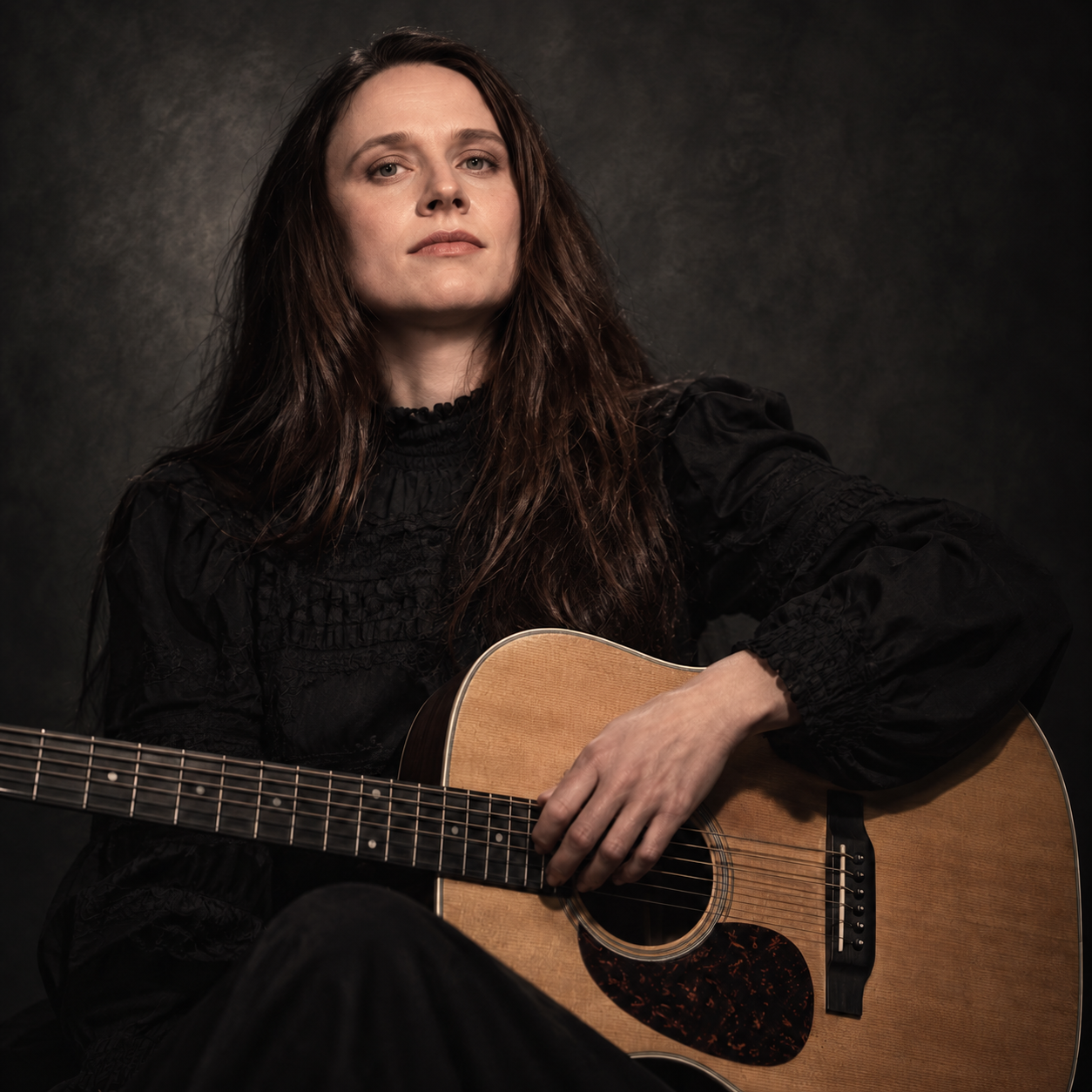
The banjo in “Right Back to It” tells me almost everything I need to know about the musical direction of Waxahatchee. It is gentle, slightly understated, and perfectly comfortable sharing space with a voice that never tries to dominate the song. Then MJ Lenderman joins in with his relaxed harmony, and the whole performance feels like two people having a conversation rather than two singers trying to impress an audience. I like that approach. It reflects something I have come to appreciate about Waxahatchee: the ability to make emotionally complicated songs sound remarkably natural. Behind that name is American singer-songwriter Katie Crutchfield, an artist who started in punk rock and gradually developed one of the most recognisable voices in contemporary indie folk and alternative country.
Katie Crutchfield, whose full name is Kathryn Crutchfield, was born on January 4, 1989, in Birmingham, Alabama. She grew up in the American South alongside her twin sister Allison, who would become an important part of her early musical life. The sisters discovered punk rock while they were young, and bands such as the Ramones and Bikini Kill helped shape their musical interests. They eventually played together in P.S. Eliot, a band that became part of the American independent punk scene. It was a very different environment from the spacious, country-influenced recordings Katie would make later, but I can hear the connection. Her music has changed considerably, yet the directness of those early years never really disappeared.
After P.S. Eliot ended, Katie began developing Waxahatchee as her own project, taking the name from Waxahatchee Creek in Alabama, near where she grew up. Her first album, American Weekend, appeared in 2012 and introduced a remarkably intimate style of songwriting. The recordings were deliberately simple, built around her voice, guitar and personal observations. There was little interest in making everything sound polished. Instead, the songs offered a close view of a young songwriter trying to understand relationships, uncertainty and the experience of growing up. I find that simplicity particularly interesting because it leaves very little distance between the person writing the song and the listener hearing it.
From Bedroom Recordings to a Fuller Sound
The next important step came with Cerulean Salt in 2013, released through Don Giovanni Records. The album brought a fuller band sound into her music without sacrificing the vulnerability of her earlier work. Songs such as “Coast to Coast” introduced a more driving rhythm, while “Swan Dive” demonstrated how effectively she could combine a memorable melody with difficult emotions. I hear an artist becoming more confident with arrangements, learning how drums, bass and electric guitars can support a song without overwhelming its meaning. The production is still relatively rough, especially compared with her later albums, but I think that works in its favour. The guitars have a slightly abrasive character, and her voice sometimes sits within the instrumental sound rather than clearly above it. That lack of separation is part of the record’s identity, not necessarily a weakness.
Her development continued with Ivy Tripp in 2015 and Out in the Storm in 2017, both released through Merge Records. The latter, produced by John Agnello, pushed further into guitar-driven indie rock, with more forceful arrangements and a sharper emotional tone. These recordings showed that Waxahatchee was never limited to quiet acoustic songwriting. Katie could work with distortion, energetic drumming and dense instrumental passages while keeping her personal voice intact. For my taste, some of these louder arrangements make the individual details of her singing less immediately noticeable. That is not a criticism of the music itself, but it helps explain why her later recordings appeal to me more. I find her most convincing when the instrumentation gives her phrasing enough room to breathe.
One of the interesting things about Katie’s musical background is that country music was familiar to her long before she began making records that openly reflected it. She grew up hearing classic country, even while punk and alternative rock were becoming central to her musical identity. Over time, influences such as Lucinda Williams, Gillian Welch, Tom Petty and R.E.M. became increasingly visible in her songwriting. I appreciate that her movement toward country music did not sound like an attempt to follow a trend. It was more a process of bringing influences that had always been present into clearer focus. Her Southern accent, especially the way she stretches certain vowels and places words just behind the beat, became an important part of that development.
Saint Cloud: A Change That Made Sense
For me, Saint Cloud, released by Merge Records in March 2020, is the album where Waxahatchee’s different musical influences come together most convincingly. Working with producer Brad Cook and musicians from the band Bonny Doon, Katie moved toward a warmer and more open style of alternative country. The album also marked an important personal change, as she had stopped drinking and was working through the experiences and emotions connected with sobriety. Rather than making a record entirely about recovery, she used that new perspective to write about relationships, responsibility and understanding herself. I think the result is a more assured collection of songs, with fewer moments where the arrangements seem to compete with the writing.
“Fire” is an excellent example of what changed. The song has a steady pulse, a memorable vocal melody and an arrangement that allows small instrumental details to remain audible. Katie’s singing is controlled without becoming overly careful, and I particularly like the way she moves between a conversational delivery and a more sustained melodic line. On a revealing pair of speakers or headphones, the recording offers a clear sense of the relationship between the central vocal, the guitars and the rhythm section. The instruments have their own places in the stereo image, but they still feel like parts of the same performance. I would not describe the recording as a demonstration of spectacular soundstage width or exaggerated dynamics. Its strength lies in the natural balance of the arrangement and the way the production supports the song.
Saint Cloud also changed the direction of Katie’s career. Its reception introduced her music to a wider audience and established her as a significant voice in the growing connection between independent rock and modern Americana. What interests me most is that the change did not require her to abandon the emotional honesty of her earlier albums. The songs became more accessible, but they did not suddenly turn into straightforward commercial country music. There was still uncertainty in the writing, and her melodies retained their slightly unconventional character. That combination of familiarity and unpredictability is one of the reasons I consider the album such a good introduction to Waxahatchee.
Another important part of this period was Katie’s collaboration with singer-songwriter Jess Williamson. Together they formed Plains and released I Walked With You a Ways in 2022 through ANTI-. The project allowed both musicians to explore their shared affection for traditional country songwriting, harmony singing and uncomplicated arrangements. Brad Cook also produced the album, continuing a creative relationship that would become increasingly important to Katie’s work. I enjoy the contrast between the two voices, particularly the way their different vocal characters give the harmonies a sense of movement. Plains also demonstrated that Katie could work within a more recognisable country tradition without losing the qualities that distinguish Waxahatchee.
Tigers Blood: Confidence Without Excess
In March 2024, Waxahatchee released Tigers Blood, her sixth studio album and her first under the ANTI- label. Recorded at Sonic Ranch in Texas with Brad Cook producing, the album brought together musicians including Phil Cook, Spencer Tweedy and MJ Lenderman. Katie had already established a clear direction with Saint Cloud, so there was no need for a dramatic reinvention. Instead, she concentrated on developing the songwriting and making the interaction between the musicians feel even more natural. That decision makes sense to me. I hear an artist who is comfortable with her musical identity and no longer feels obliged to make every new album sound completely different from the previous one.
The opening track, “3 Sisters”, immediately shows the album’s character. The arrangement builds around a strong melody, with electric guitars, bass and drums creating a relaxed but purposeful foundation. Katie’s voice remains central, although she does not always deliver the words in the most obvious rhythmic positions. She has a habit of allowing a phrase to arrive slightly later than expected, then fitting the next line into the available space without making it sound awkward. I find this increasingly interesting with repeated listening. Her vocal timing is not simply a stylistic decoration; it is part of how she gives individual words their meaning.
“Right Back to It”, featuring MJ Lenderman, is probably the song I would choose to introduce someone to this stage of her career. The banjo gives the arrangement a gentle rhythmic movement, while the guitar and understated percussion provide a stable foundation. Lenderman’s harmony has a slightly rougher quality than Katie’s voice, and that contrast makes their interaction particularly appealing. There is no attempt to turn the duet into a dramatic vocal performance. Instead, both singers leave space for the other, which suits a song about the changing emotions within a long relationship. I appreciate the restraint, especially when the melody opens up and the voices come together without the arrangement becoming unnecessarily large.
The recording also offers some enjoyable details for anyone interested in audiophile music. The banjo has a distinct attack, followed by a short, natural decay, while the electric guitar contributes a warmer and more sustained sound. These differences remain easy to follow without making the instruments feel artificially separated. The bass provides a rounded foundation, and the drums maintain the relaxed pace without drawing too much attention to themselves. A transparent midrange helps reveal the small changes in Katie’s vocal tone, particularly when she moves from one phrase into the next. For me, the value of that detail is musical rather than technical. It makes the performance feel more personal because I can hear how carefully she shapes the words.
What also separates Tigers Blood from some of her earlier recordings is the broader emotional perspective. Katie is no longer writing exclusively from a place of personal uncertainty or immediate emotional conflict. Songs such as “365” demonstrate a willingness to examine complicated relationships with more patience and understanding. Her writing has become more confident without losing its ability to question things. I hear less urgency to explain every feeling and more trust in the listener to understand what is being suggested. That maturity is one of the album’s strongest qualities, although listeners who prefer the raw energy of Out in the Storm may find the newer material less confrontational.
Katie has also spoken about influences that may surprise listeners who associate her mainly with country music. She has mentioned the importance of SZA’s approach to vocal rhythm, particularly during the development of Saint Cloud. That connection becomes more interesting when I listen to the way Katie places syllables and changes the length of individual phrases. Her melodies often sound effortless, but the timing is more considered than it first appears. The combination of country storytelling, alternative rock and rhythmic ideas borrowed from other styles gives Waxahatchee a personality that is difficult to reduce to a single genre.
I think Waxahatchee’s importance lies partly in showing how naturally independent rock and traditional American songwriting can exist together. Katie’s career connects the DIY punk scene of Birmingham with the contemporary Americana audience, and her collaborations with Brad Cook, Jess Williamson and MJ Lenderman have helped develop that connection. She has not abandoned her earlier music or tried to disguise where she came from. Instead, each stage has contributed something to the way she now writes, sings and arranges her songs. That makes her musical development interesting even for listeners who do not normally spend much time with indie rock or alternative country.
For someone discovering Waxahatchee, I would begin with Saint Cloud, follow it with Tigers Blood, and then explore Cerulean Salt to understand how much her sound has changed. Those three albums reveal the movement from intimate, rough-edged songwriting toward a more spacious and confident musical approach. They also show that her strengths were present long before she became associated with country-influenced arrangements. I admire her willingness to let a song remain understated, her distinctive Southern vocal character and her ability to make complicated feelings understandable without simplifying them. The early records have an urgency that the later albums do not always seek to reproduce, while the newer recordings offer greater instrumental balance and more subtle vocal performances. Taken together, they present an artist whose growth feels believable because her musical identity has remained consistent. Ultimately, the quality that defines Waxahatchee for me is the natural honesty of Katie Crutchfield’s vocal phrasing.